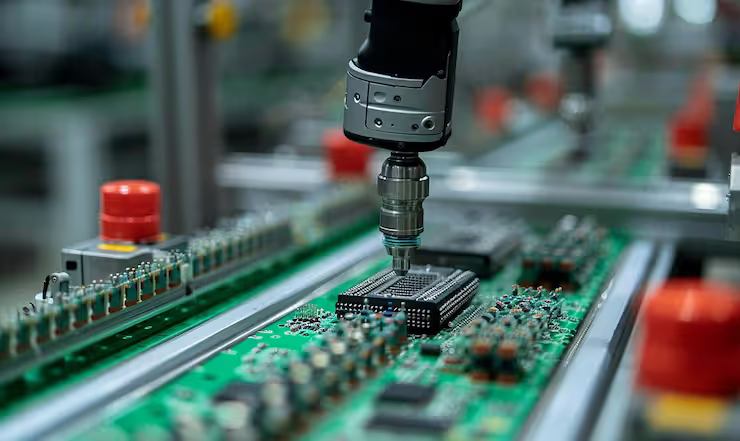
Printed Circuit Boards (PCBs) are the structural foundation of modern electronics, connecting components through conductive pathways. A critical stage in PCB manufacturing is the drilling process, where precise holes are created for vias, component leads, and electrical connections. PCB drilling machines are specialized equipment designed to perform high-precision hole drilling in multilayer boards.
The technology exists because electronic circuits require extremely accurate interconnections. In modern devices such as smartphones, industrial automation systems, medical electronics, and automotive control modules, thousands of micro-vias and component holes must be drilled with micron-level accuracy. Manual drilling methods cannot achieve the required precision or speed, which led to the development of automated PCB drilling machines.
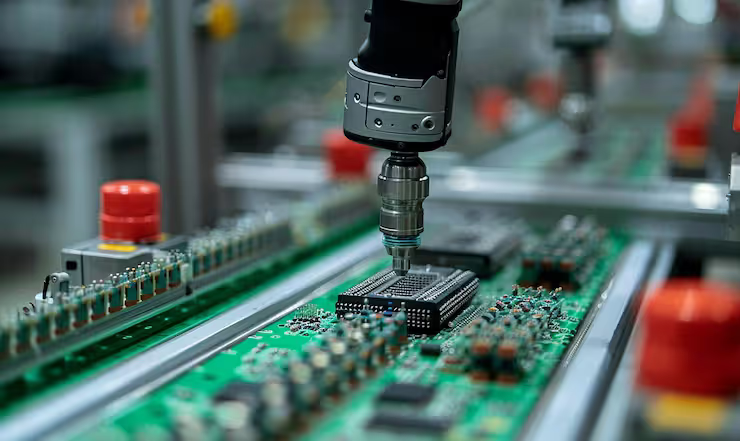
These machines operate using computer-controlled systems that follow digital PCB design files. High-speed spindles rotate micro-drill bits that can reach speeds exceeding 100,000 revolutions per minute. The drilling path is guided by CNC (Computer Numerical Control) technology, ensuring consistency across high-volume PCB production lines.
Common PCB drilling technologies include:
• Mechanical micro-drilling using carbide drill bits
• Laser drilling for microvias in high-density boards
• CNC drilling systems integrated with PCB manufacturing lines
• Automated tool management and alignment systems
The process typically follows these steps:
| Step | Process Description |
|---|---|
| PCB Design File Input | CAD or CAM data is loaded into the drilling system |
| Tool Selection | Drill bits are automatically selected based on hole size |
| Positioning | CNC system aligns the PCB panel with micron accuracy |
| Drilling Operation | High-speed spindle drills vias and component holes |
| Quality Verification | Optical inspection confirms hole accuracy |
Because PCB technology continues evolving toward miniaturization and higher circuit density, drilling machines are constantly improving to support smaller holes and multilayer board structures.
Why PCB Drilling Technology Matters in Modern Electronics
PCB drilling machines play a fundamental role in electronics manufacturing, semiconductor integration, and advanced circuit design. The growing demand for compact electronic devices has increased the need for high-precision drilling technology.
Today’s electronics industry relies heavily on high-density interconnect (HDI) PCBs. These advanced boards require extremely small holes that connect multiple layers of circuitry. Without precise drilling capabilities, modern electronic devices would not function reliably.
Industries that depend on PCB drilling technology include:
• Consumer electronics manufacturing
• Automotive electronics and electric vehicle control systems
• Telecommunications infrastructure
• Aerospace and defense electronics
• Industrial automation and robotics
• Medical diagnostic equipment
The importance of PCB drilling machines can be better understood by examining their technical advantages.
| Key Advantage | Explanation |
|---|---|
| Precision Engineering | Micron-level drilling accuracy ensures reliable electrical connectivity |
| High Production Efficiency | Automated drilling improves manufacturing throughput |
| Miniaturization Support | Enables smaller vias used in HDI and multilayer PCBs |
| Process Consistency | CNC automation maintains identical hole placement across large batches |
| Integration with PCB Design Software | CAD and CAM integration improves manufacturing workflow |
High CPC technical keywords often associated with this technology include:
• PCB manufacturing technology
• CNC drilling machine systems
• HDI PCB fabrication
• Microvia drilling technology
• Electronics manufacturing equipment
• Precision engineering tools
• Semiconductor PCB design
As the electronics industry moves toward advanced computing, artificial intelligence hardware, and 5G communication devices, the demand for high-precision PCB drilling systems continues to expand.
Emerging Trends and Recent Developments in PCB Drilling Technology
The past year has seen several advancements in PCB drilling technology driven by increasing circuit density and automation requirements.
One major trend is the adoption of laser microvia drilling systems. These machines allow manufacturers to produce extremely small holes that are difficult to achieve using traditional mechanical drilling. Laser drilling is particularly useful for HDI PCBs used in smartphones, wearable electronics, and compact computing devices.
Another important development is AI-assisted manufacturing analytics. In 2025, several PCB manufacturing equipment providers introduced machine monitoring platforms that use artificial intelligence to optimize drilling performance, detect tool wear, and reduce production errors.
The integration of Industry 4.0 smart factory systems is also transforming PCB manufacturing facilities. Drilling machines are now connected to centralized manufacturing software that tracks production metrics, equipment efficiency, and quality control.
Recent trends observed across global PCB manufacturing include:
• Expansion of high-density interconnect PCB production in 2024–2025
• Increased adoption of UV laser drilling systems
• Smart factory automation in electronics manufacturing plants
• Advanced spindle technology enabling higher RPM speeds
• Data-driven predictive maintenance systems
The following table illustrates a simplified comparison of mechanical and laser drilling technologies.
| Feature | Mechanical Drilling | Laser Drilling |
|---|---|---|
| Hole Size Capability | Suitable for standard vias | Ideal for microvias |
| Tool Wear | Requires drill bit replacement | No physical drill bit |
| Precision | High precision | Ultra-high precision |
| Production Speed | Efficient for bulk drilling | Efficient for microvia patterns |
| Application | Standard multilayer PCBs | HDI and miniaturized electronics |
These developments are shaping the future of PCB manufacturing as electronic devices become smaller, faster, and more complex.
Regulations, Standards, and Policy Considerations
PCB manufacturing equipment and processes operate within a framework of international electronics manufacturing standards. These regulations ensure product reliability, environmental safety, and electronic component compatibility.
One widely recognized set of standards comes from the IPC (Institute for Printed Circuits), an organization that develops technical standards for PCB design and manufacturing. IPC guidelines help manufacturers maintain consistency in drilling tolerances, hole quality, and multilayer PCB construction.
Environmental regulations also influence PCB manufacturing technologies. Many countries enforce restrictions on hazardous substances used in electronics manufacturing processes. Compliance with these rules ensures that PCB manufacturing facilities follow environmentally responsible practices.
Important regulatory frameworks affecting PCB drilling technology include:
• IPC PCB manufacturing standards
• RoHS (Restriction of Hazardous Substances) compliance rules
• Environmental protection regulations for industrial manufacturing
• Workplace safety guidelines for high-speed machinery
• Electronic waste management regulations
Manufacturers must also maintain traceability and quality assurance systems to meet global electronics production standards.
| Regulatory Area | Purpose |
|---|---|
| IPC Standards | Ensures PCB reliability and manufacturing quality |
| RoHS Compliance | Limits hazardous materials in electronics |
| Environmental Policies | Controls emissions and industrial waste |
| Manufacturing Safety Standards | Protects workers operating high-speed equipment |
These frameworks help ensure that PCB drilling operations meet global quality and environmental standards.Useful Tools and Resources for PCB Drilling and Design
Several digital tools and technical resources assist engineers, designers, and manufacturing specialists in understanding PCB drilling requirements.
PCB design software platforms are particularly important because drilling patterns originate from circuit design files. Engineers use these programs to define hole placement, via sizes, and multilayer interconnections before manufacturing begins.
Helpful tools and platforms include:
• PCB design and layout software
• CAM tools for PCB manufacturing preparation
• Drill file generators for CNC machines
• Electronics manufacturing simulation software
• PCB stack-up calculators for multilayer boards
Common PCB design file formats used in drilling processes include:
| File Format | Purpose |
|---|---|
| Gerber Files | Standard PCB design data |
| Excellon Drill Files | Specifies hole positions and sizes |
| ODB++ Format | Integrated PCB manufacturing data |
| IPC-2581 | Advanced manufacturing data exchange format |
Educational resources that help professionals understand PCB drilling technology include electronics engineering journals, manufacturing research papers, and technical documentation published by industry organizations.
Learning platforms, engineering forums, and technical publications also provide insights into advanced PCB manufacturing processes.
Frequently Asked Questions About PCB Drilling Machines
What is a PCB drilling machine used for?
A PCB drilling machine creates holes in printed circuit boards for electrical connections, component leads, and interlayer vias. These holes enable electronic signals to travel through multiple layers of the circuit board.
What is the difference between mechanical drilling and laser drilling in PCB manufacturing?
Mechanical drilling uses rotating carbide drill bits to create holes, while laser drilling uses high-energy laser beams. Laser drilling is commonly used for microvias in high-density interconnect PCBs.
Why is high-speed spindle technology important in PCB drilling machines?
High-speed spindles allow drill bits to rotate at extremely high RPM levels, enabling precise drilling of very small holes without damaging the PCB material.
What file formats are used to control PCB drilling machines?
PCB drilling machines typically use Excellon drill files generated from PCB design software. These files contain coordinates and hole size specifications for CNC drilling systems.
How do PCB drilling machines ensure accuracy?
Accuracy is maintained through CNC control systems, optical alignment technology, automated tool calibration, and inspection systems that verify hole placement and diameter.
Conclusion
PCB drilling machines are an essential part of modern electronics manufacturing, enabling the precise creation of holes required for circuit connectivity. As electronic devices continue becoming smaller and more sophisticated, drilling technology must evolve to support higher circuit densities and advanced PCB designs.
Recent innovations such as laser microvia drilling, AI-driven manufacturing analytics, and smart factory integration are transforming how PCBs are produced. At the same time, global manufacturing standards and environmental regulations ensure that PCB production remains reliable and sustainable.
Understanding the fundamentals of PCB drilling machines helps engineers, researchers, and technology professionals appreciate the complex processes behind modern electronics. As the electronics industry advances toward next-generation computing, communication networks, and intelligent devices, PCB drilling technology will remain a cornerstone of precision engineering and electronic innovation.