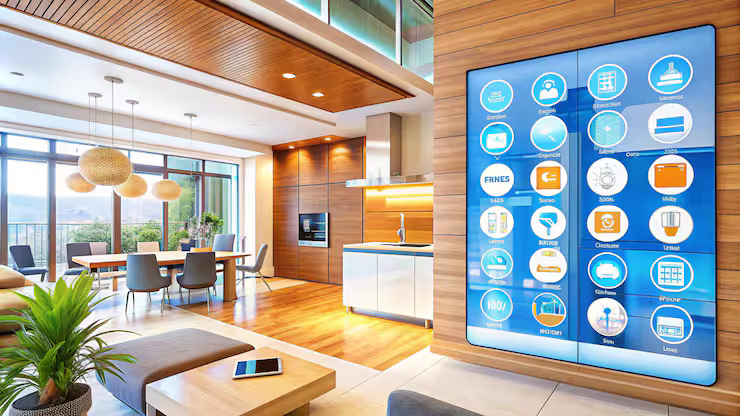
Home automation systems refer to technologies that connect and manage household devices through a centralized network. These systems allow everyday home equipment—such as lighting, climate control, security systems, and appliances—to communicate with each other and respond automatically to user commands or environmental changes.
The idea behind automation is to make homes more responsive, efficient, and convenient. With connected devices and smart controllers, many daily household functions can operate automatically or be managed remotely through a smartphone, tablet, or voice-enabled assistant.
Home automation has evolved alongside the growth of the Internet of Things (IoT), a technological framework that allows physical devices to share information through the internet. In a modern smart home environment, sensors, smart switches, thermostats, cameras, and connected appliances exchange data to perform tasks with minimal manual interaction.
For example, lighting systems may automatically adjust based on time of day, security cameras can detect motion and send alerts, and thermostats can adapt temperature settings based on occupancy patterns.
The concept is not entirely new. Early forms of automation existed in programmable timers and remote-controlled appliances. However, advancements in wireless connectivity, cloud computing, and artificial intelligence have significantly expanded the capabilities of modern smart home technology.
Today, home automation systems are used in houses, apartments, and residential buildings worldwide. They are increasingly integrated into modern construction projects and renovation plans, reflecting a broader shift toward connected home environments.
Why Home Automation Matters Today
Home automation has gained attention because it addresses several practical needs in modern living. As urban populations grow and digital technologies become part of everyday life, people are seeking ways to make homes more efficient, secure, and adaptable.
One major advantage of home automation systems is improved energy efficiency. Smart thermostats, automated lighting, and intelligent power management systems help reduce unnecessary electricity usage. By adjusting systems based on occupancy or schedules, households can optimize energy consumption.
Security is another important factor. Smart home security solutions often include:
-
Motion sensors
-
Connected cameras
-
Smart door locks
-
Automated alarms
-
Real-time notifications
These features help residents monitor their homes even when they are away.
Convenience also plays a key role. Instead of manually adjusting multiple devices, homeowners can manage various systems from a single dashboard or mobile application.
Another area where automation has impact is accessibility. For elderly individuals or people with mobility challenges, voice-controlled devices and automated functions can make everyday tasks easier to manage.
In addition, home automation contributes to the broader trend of digital living environments, where technology supports daily routines such as lighting control, climate management, and appliance coordination.
As cities continue to adopt smart infrastructure and connected technologies, residential automation systems are expected to play an increasingly important role in the development of smart cities and intelligent housing.
Recent Developments in Smart Home Technology
Over the past year, several developments have influenced the home automation industry. Advances in connectivity standards, artificial intelligence integration, and device compatibility have improved how smart homes operate.
One of the most notable changes occurred in 2024 with the wider adoption of the Matter smart home standard. Matter is a connectivity protocol developed by industry organizations including the Connectivity Standards Alliance. Its goal is to improve compatibility between devices from different manufacturers.
Before this standard, many smart home devices worked only within specific ecosystems. Matter allows compatible devices to communicate across platforms more easily, making integration simpler for users.
Artificial intelligence is also becoming more prominent in smart home environments. AI-powered assistants can analyze user habits and automate tasks such as lighting schedules or temperature adjustments.
Recent trends observed in 2025 smart home technology reports include:
| Smart Home Trend | Description |
|---|---|
| AI-driven automation | Devices adapt to daily routines using machine learning |
| Energy monitoring tools | Systems track electricity consumption in real time |
| Privacy-focused devices | New designs prioritize local data processing |
| Multi-device ecosystems | Homes integrate lighting, appliances, and security systems |
Another development involves edge computing, where data is processed locally on devices rather than entirely in the cloud. This approach improves response speed and enhances privacy.
Smart home technology is also becoming more common in residential construction projects. Many newly built homes now include infrastructure that supports connected lighting, security networks, and climate systems.
These changes show that home automation is moving beyond simple remote control functions toward more intelligent and adaptive environments.
Regulations and Government Programs
As connected devices become more widespread, governments and regulatory organizations have begun introducing policies that address security, data protection, and energy efficiency.
One important area of regulation involves data privacy. Since smart home systems collect information about household activities, many countries require companies to comply with data protection laws.
Examples include:
| Region | Key Regulation | Focus |
|---|---|---|
| European Union | General Data Protection Regulation (GDPR) | Data privacy and user consent |
| United States | IoT Cybersecurity Improvement Act | Security standards for connected devices |
| India | Digital Personal Data Protection Act 2023 | Data handling and consumer privacy |
Energy efficiency policies also influence home automation systems. Governments encourage the use of smart thermostats and energy monitoring systems because they help reduce electricity consumption.
In some countries, building standards now include guidelines for energy-efficient residential infrastructure, which may involve automated lighting systems and intelligent temperature controls.
Cybersecurity is another regulatory focus. As more devices connect to home networks, the risk of unauthorized access increases. Security guidelines often recommend:
-
Regular software updates
-
Secure network configuration
-
Encryption of device communication
-
Authentication controls
These policies aim to ensure that smart home technology develops in a safe and responsible way while protecting users' data and household systems.
Helpful Tools and Resources for Smart Homes
Several digital tools and platforms support home automation systems and help users manage connected devices more efficiently. These resources range from mobile applications to planning tools that help households understand their energy use.
Common tools used in smart home environments include:
| Tool Category | Purpose |
|---|---|
| Smart home dashboards | Manage connected devices from a single interface |
| Energy monitoring platforms | Track electricity consumption patterns |
| Home network analyzers | Monitor connectivity between devices |
| Automation planners | Design schedules for lighting and appliances |
| Device compatibility checkers | Verify interoperability between smart devices |
Popular categories of smart home applications include:
-
Voice assistant platforms for voice-based control of connected devices
-
Energy analytics applications that display power usage data
-
Security monitoring dashboards for cameras and motion sensors
-
Automation workflow builders that create device routines
Online educational resources also help homeowners learn about smart home architecture, device compatibility, and system planning.
Technical documentation from industry organizations and technology companies often explains how IoT devices communicate and how users can design efficient home automation setups.
These resources are useful for both beginners exploring connected home technology and experienced users expanding their systems.
Frequently Asked Questions About Home Automation
What is a home automation system?
A home automation system is a network of connected devices that allows household equipment to operate automatically or be controlled remotely. These systems often include lighting, security cameras, thermostats, and appliances connected through the internet or local networks.
How does smart home technology work?
Smart home technology uses sensors, wireless communication, and software platforms to coordinate devices. Commands can be issued through mobile apps, voice assistants, or automated schedules based on environmental conditions.
Is home automation only for new homes?
No. Many automation systems can be installed in existing homes using wireless devices and smart plugs. These technologies allow households to integrate automation without major structural changes.
Are home automation systems energy efficient?
Many systems are designed to improve energy management. Smart thermostats and automated lighting systems help reduce unnecessary energy consumption by adjusting settings based on occupancy or schedules.
What technologies are commonly used in smart homes?
Common technologies include Wi-Fi connectivity, Bluetooth communication, IoT sensors, cloud-based management platforms, and artificial intelligence algorithms that analyze usage patterns.
Conclusion
Home automation systems represent a significant development in modern residential technology. By connecting devices through intelligent networks, these systems allow households to manage lighting, climate, security, and appliances in more efficient and coordinated ways.
The growth of the Internet of Things, improvements in wireless communication, and advances in artificial intelligence have transformed simple automated devices into complex smart home ecosystems.
Recent developments such as the Matter interoperability standard and edge computing are improving compatibility and privacy, while government policies continue to address cybersecurity and data protection concerns.
As technology continues to evolve, home automation systems are likely to become more integrated into everyday living environments. Whether used for energy management, security monitoring, or convenience, smart home technology illustrates how digital infrastructure can support modern lifestyles while improving efficiency and adaptability in residential spaces.